
14-day re-clean guarantee
If you're not fully satisfied, we come back free within 14 days. No hassle, no extra charge.
Two-step cleaning and conditioning for aniline, semi-aniline, pigmented, and bonded leather. Restores moisture and prevents cracking.

Awarded Top Pro status by Thumbtack: 2024 & 2025

Leather cleaning in Raleigh is the two-step process of lifting surface oils, residue, and stains from aniline, semi-aniline, and pigmented leather, then replenishing the natural oils that have evaporated from years of use. Raleigh humidity is hard on leather year-round, alternating between summer moisture that accelerates oil absorption and winter indoor heat that pulls oils back out and stiffens the finish. Households across Cary, Apex, Durham, and Chapel Hill benefit from professional cleaning and conditioning every nine to twelve months to prevent the cracking that comes from finish dryness.
Specialty leather cleaning across Raleigh, Cary, Apex, and the Triangle for sofas, recliners, office chairs, and car interiors.
pH-balanced cleaners formulated specifically for hide finishes. The modern aniline pieces favored by Research Triangle home-office buyers absorb differently than the pigmented family-room sofas common in Cary and Apex; we match the cleaner to both.
Conditioner restores moisture stripped during cleaning. RTP tech-worker home offices that run AC eight months a year leave leather drier than the manufacturer ever intended; skipping conditioning ages it faster.
Triangle pollen, summer humidity from May through September, and winter forced-air heat are the three things that crack a Raleigh leather sofa along the armrests and headrests. Conditioning interrupts the cycle.
Fresh ink often lifts. Old ink may remain. Dye transfer from denim onto light pieces in North Hills and Five Points executive offices usually responds. We tell you what to expect before starting.
Leather cleaning and conditioning across the Triangle is one of our higher-value services, with regular accounts in North Raleigh, Cary, Apex, and Chapel Hill executive households.
No hidden fees guaranteed
Service minimum $200 per visit.
We identify the finish first, then decide. We clean finished and protected pigmented leather, semi-aniline, bonded leather carefully, and faux by hand, no steam and no extraction. We decline real suede, nubuck, and cowhide, which need a solvent-only method we do not offer. The Italian-import aniline common in Glenwood South lofts absorbs differently than the pigmented mid-market sofas in Cary, so the cleaner matches the finish.
Hidden-spot test on every piece before cleaning the full surface. The vegetable-tanned saddle leather we see on accent chairs from RTP estate sales gets a different protocol than chrome-tanned modern sofas.
Massaged into the grain and given dwell time. Triangle homes running AC at 72 degrees pull moisture out of leather; conditioning is a feeding, not a wipe, especially through Raleigh summer.
Most pieces look and feel 5 to 10 years younger after cleaning and conditioning. Color uniformity returns where dryness had washed it out, particularly on the south-facing sofas in Cary McMansions where afternoon sun bleaches one cushion at a time.
Hand-finished cleaning around stitching prevents cleaner from pooling in seams. Worn thread on older sectionals from Apex and Holly Springs custom builds protected during the pass.
Final pass corrects any uneven tone where dryness or oil had patched the hide. North Hills office chairs that have been ridden hard for five years come back reading consistent across the seat and back.
Most Raleigh leather jobs complete in 90 minutes to two hours per piece, with the conditioner fully absorbed and the surface ready for light use within 4 to 6 hours.
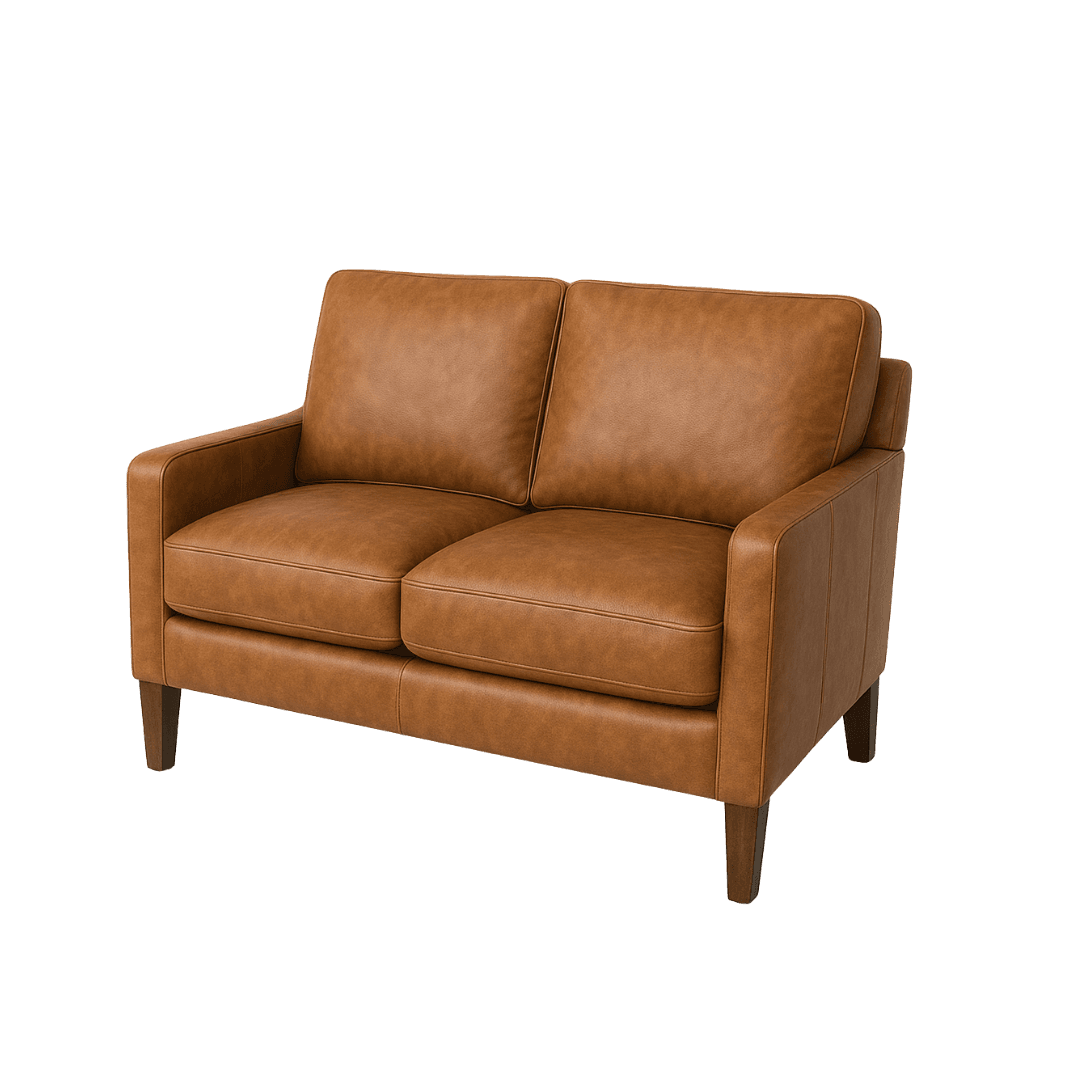
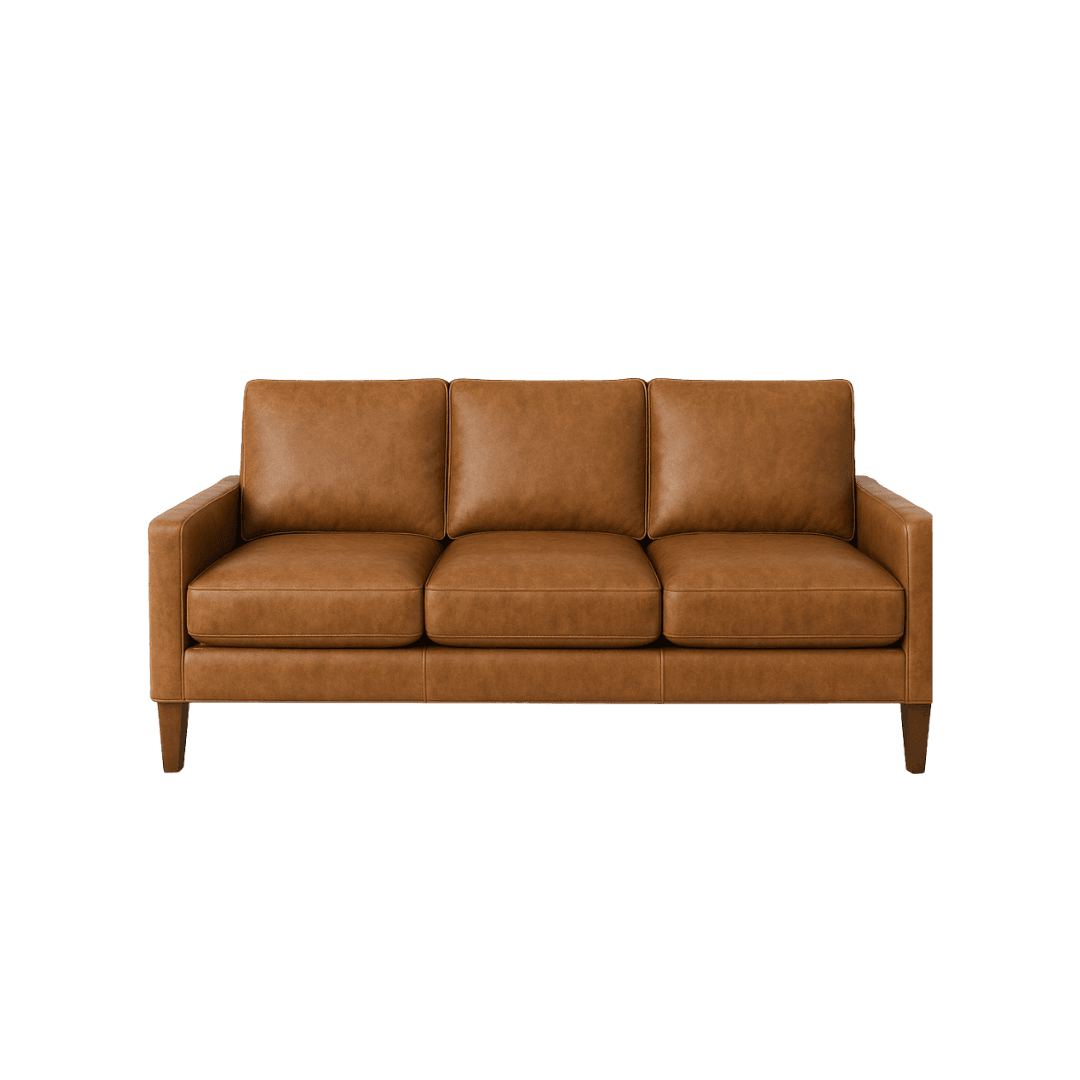
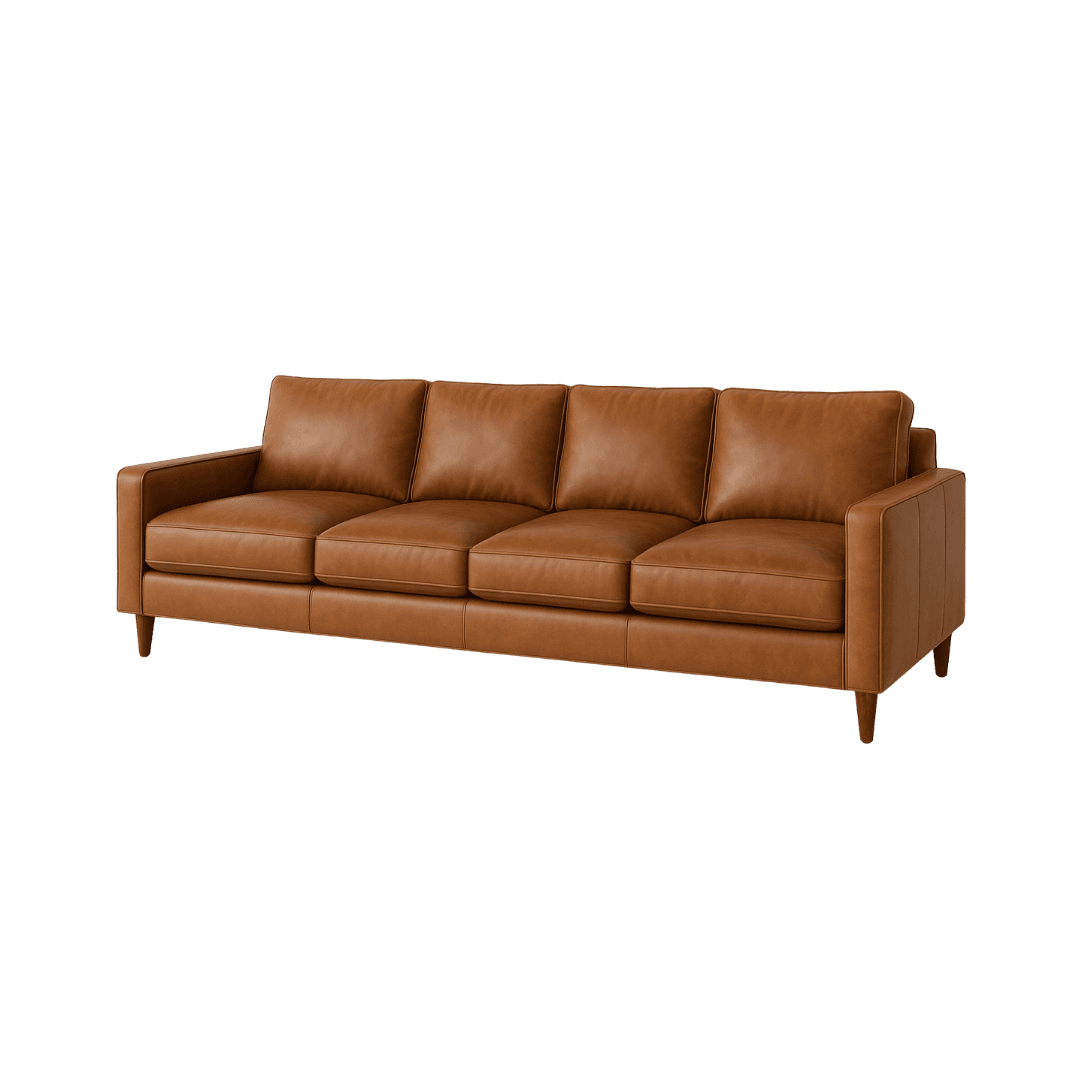
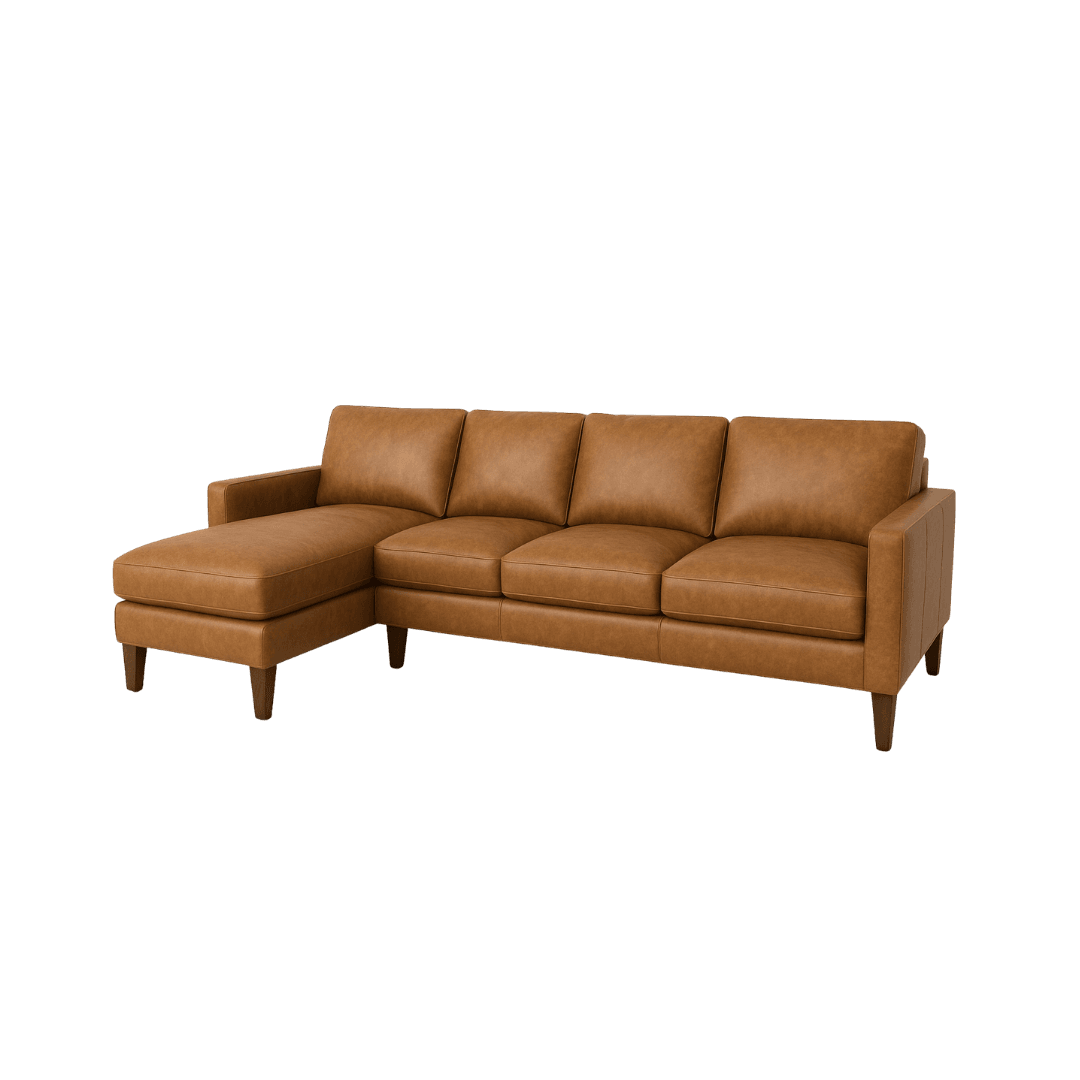
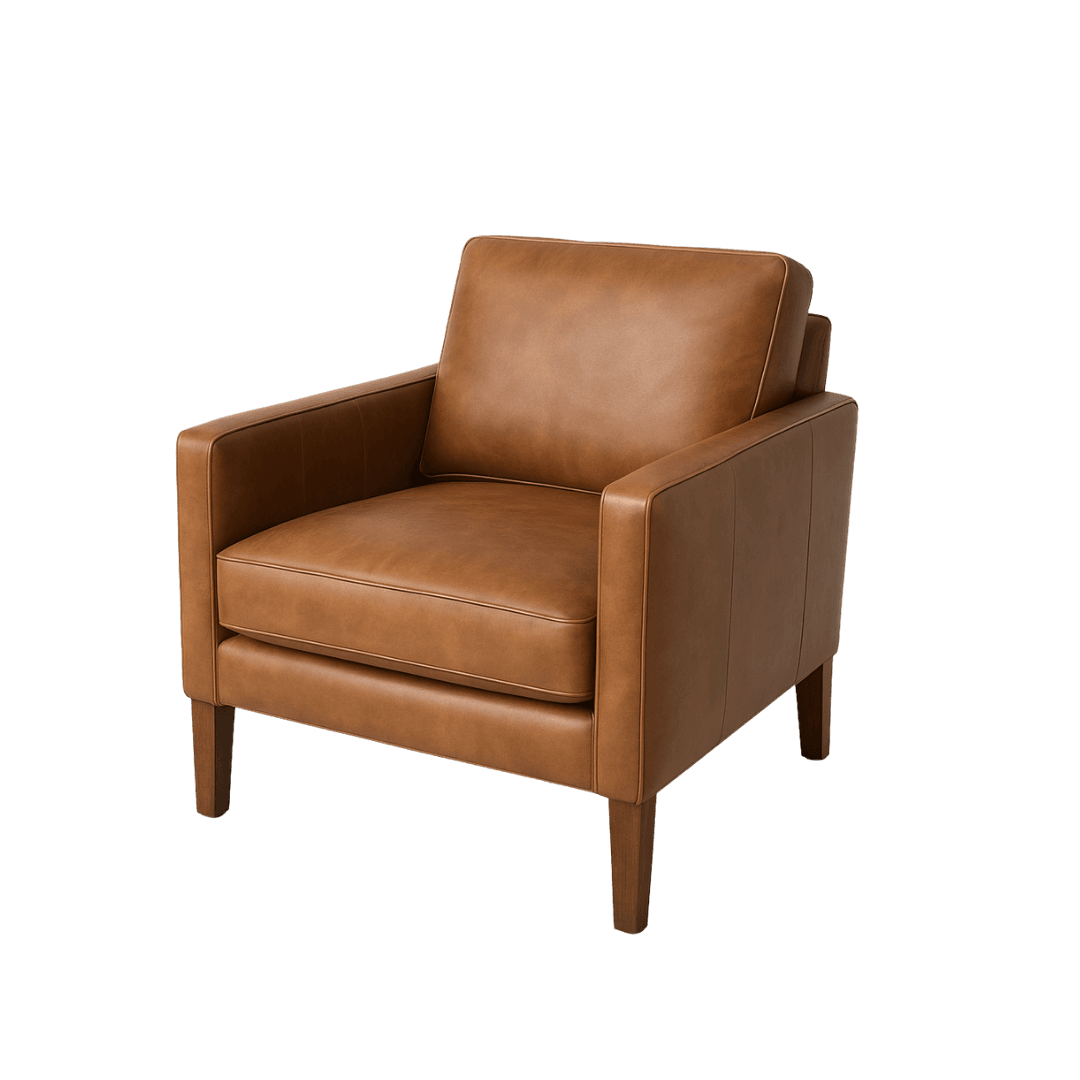
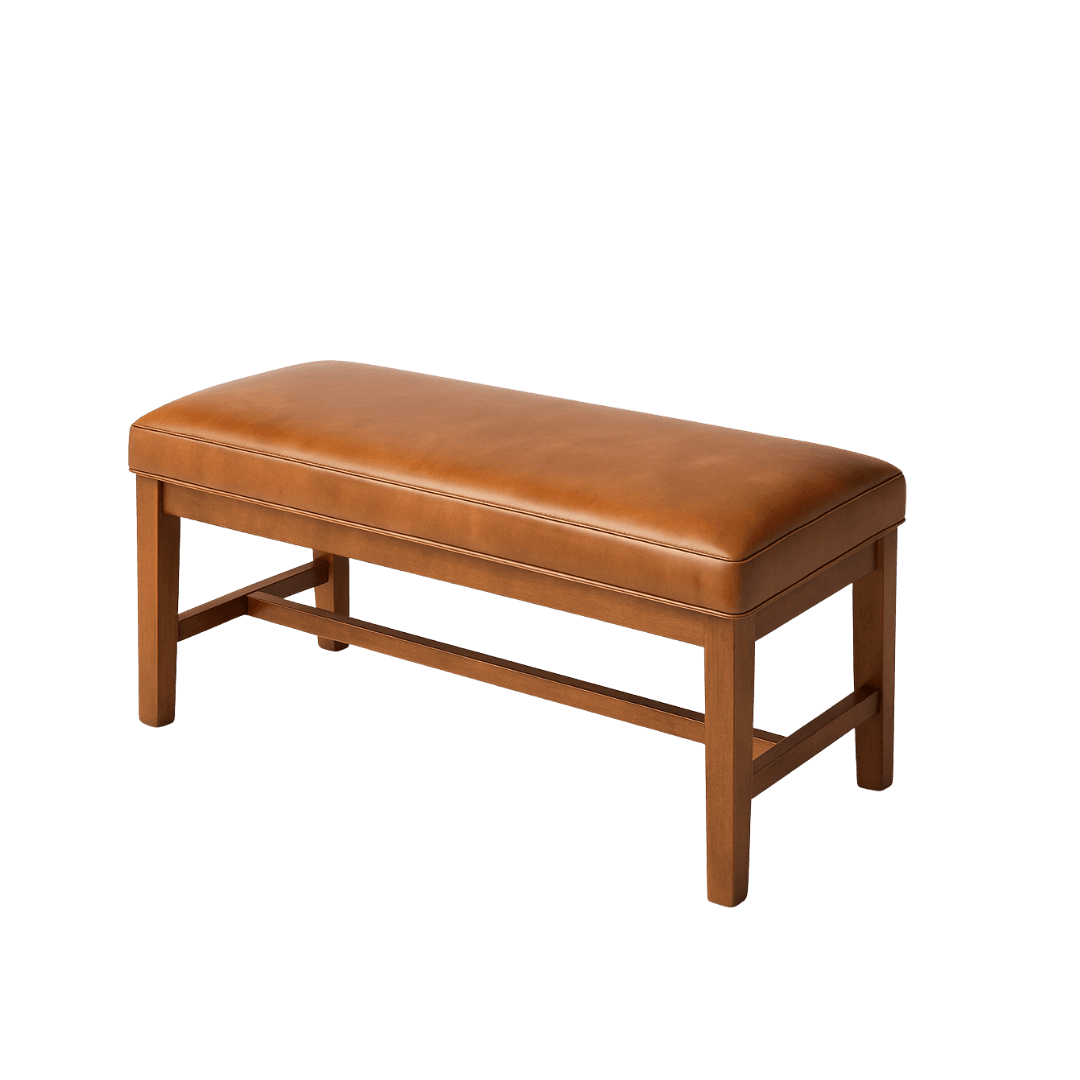
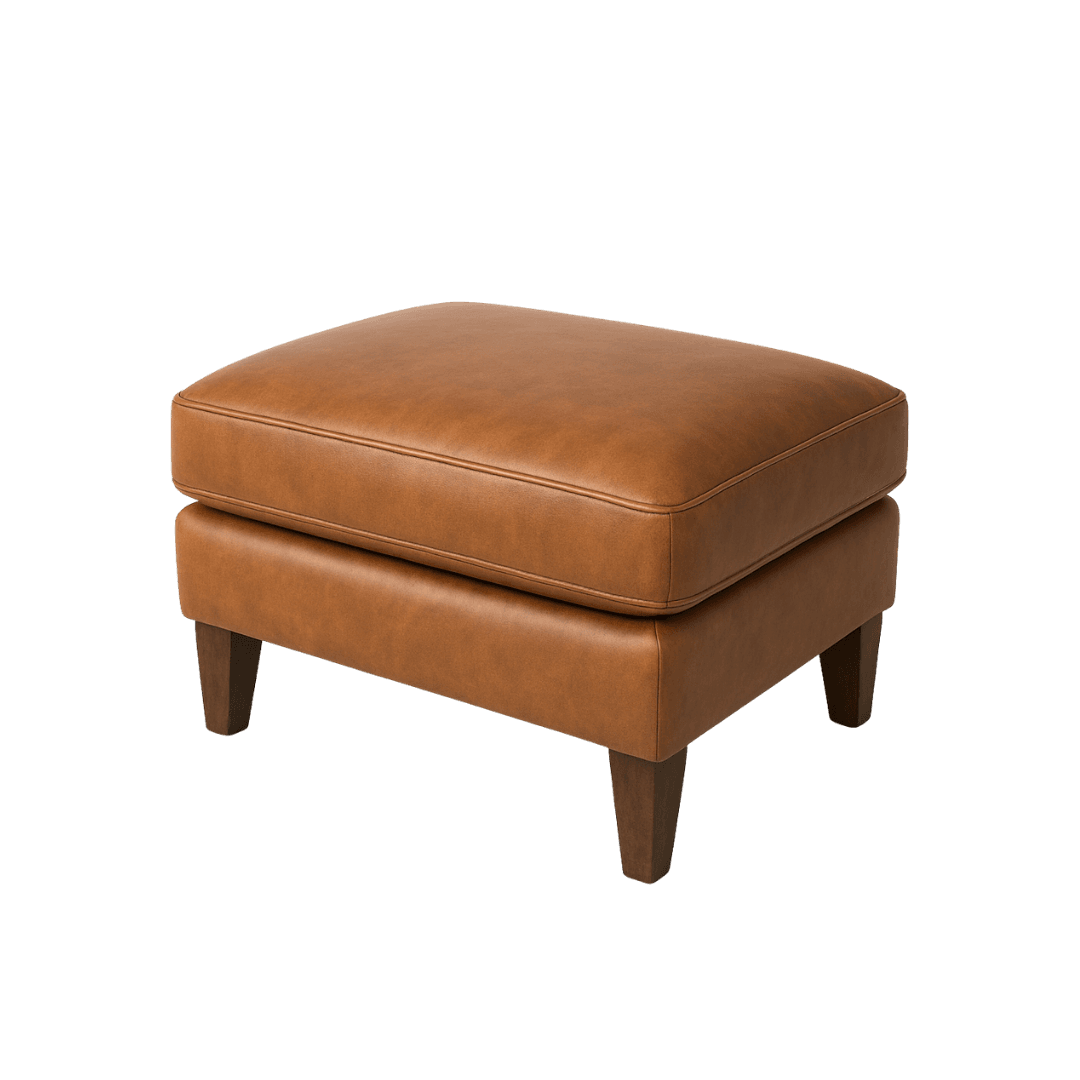
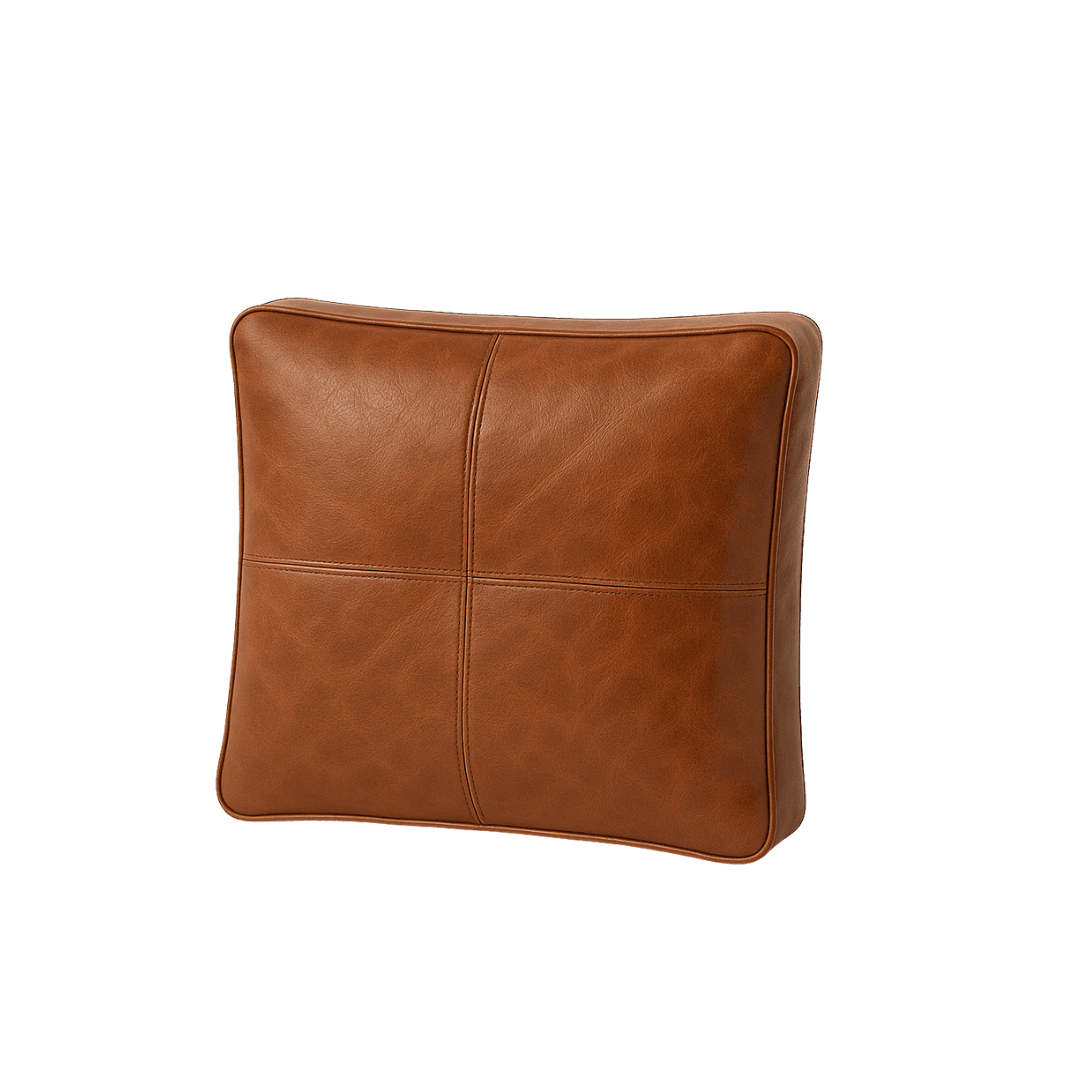
Drag the slider to compare each leather piece before and after our cleaning.
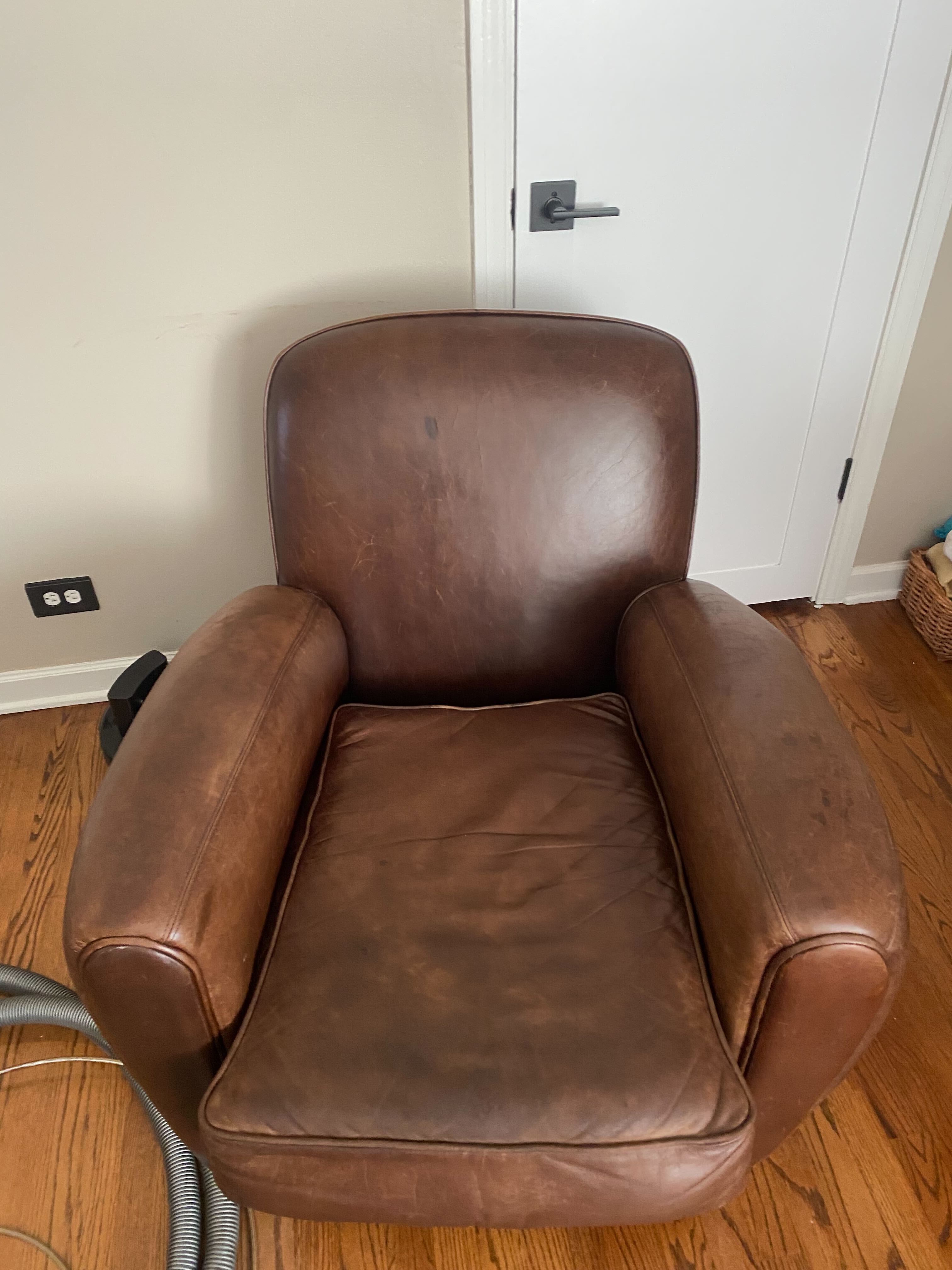
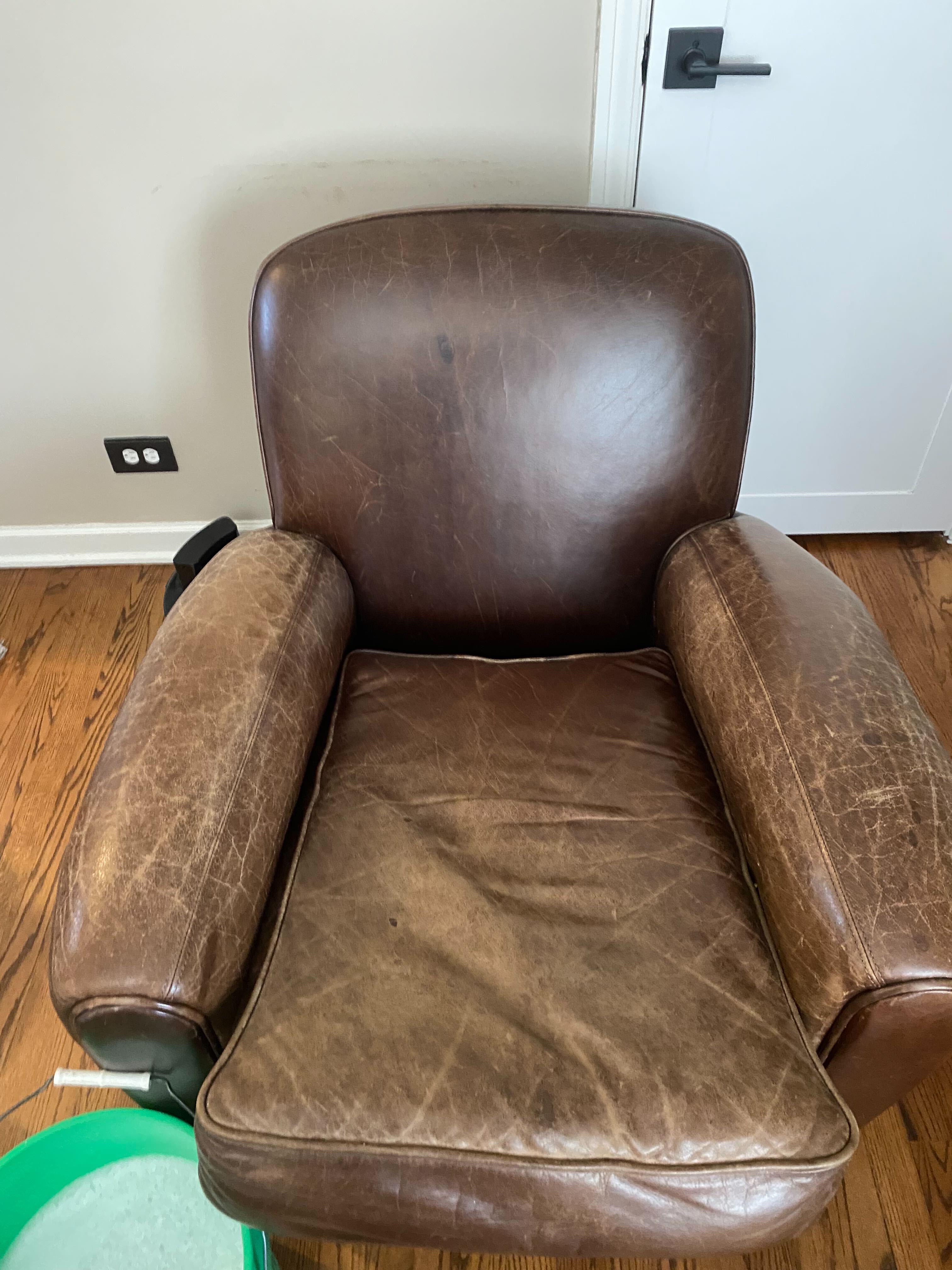
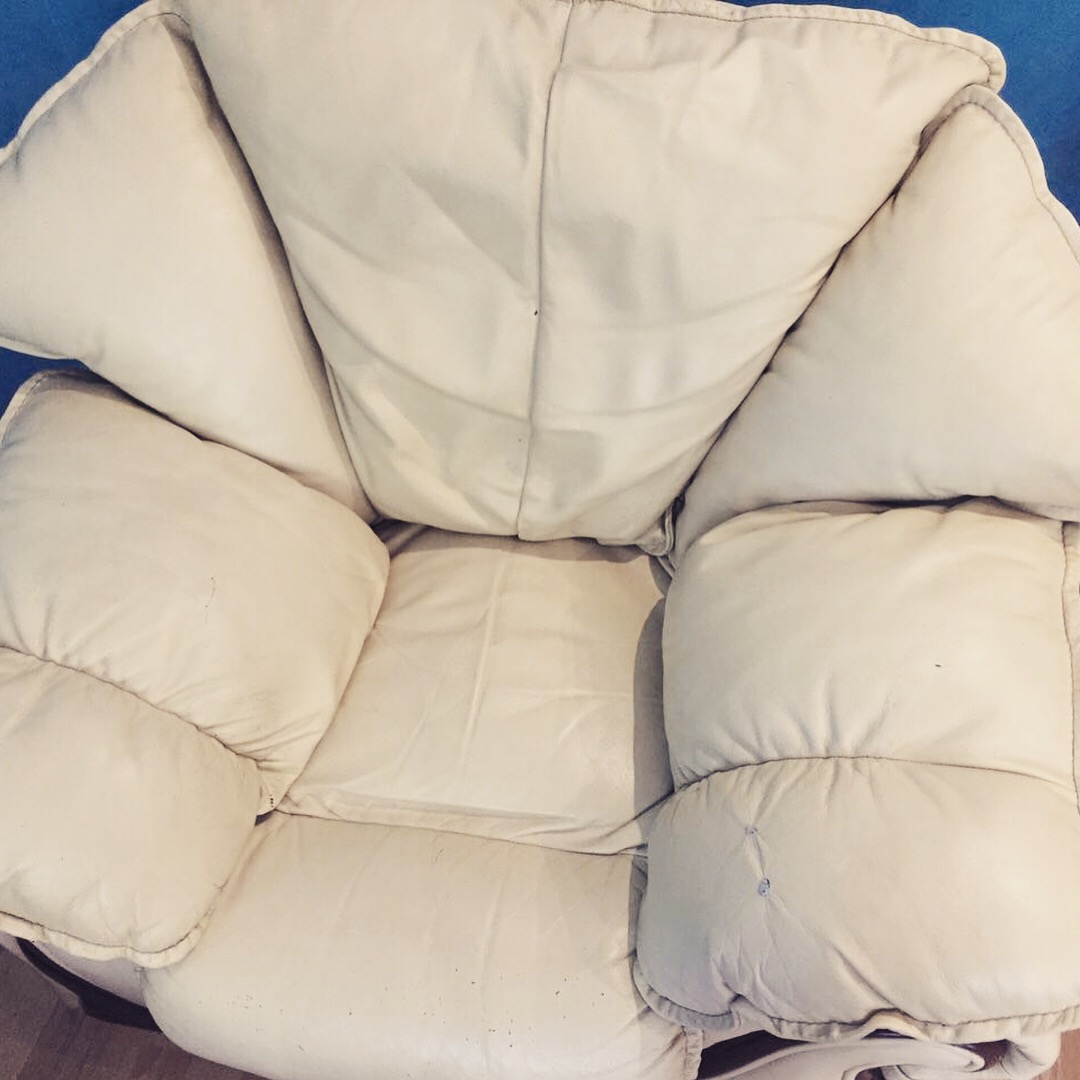
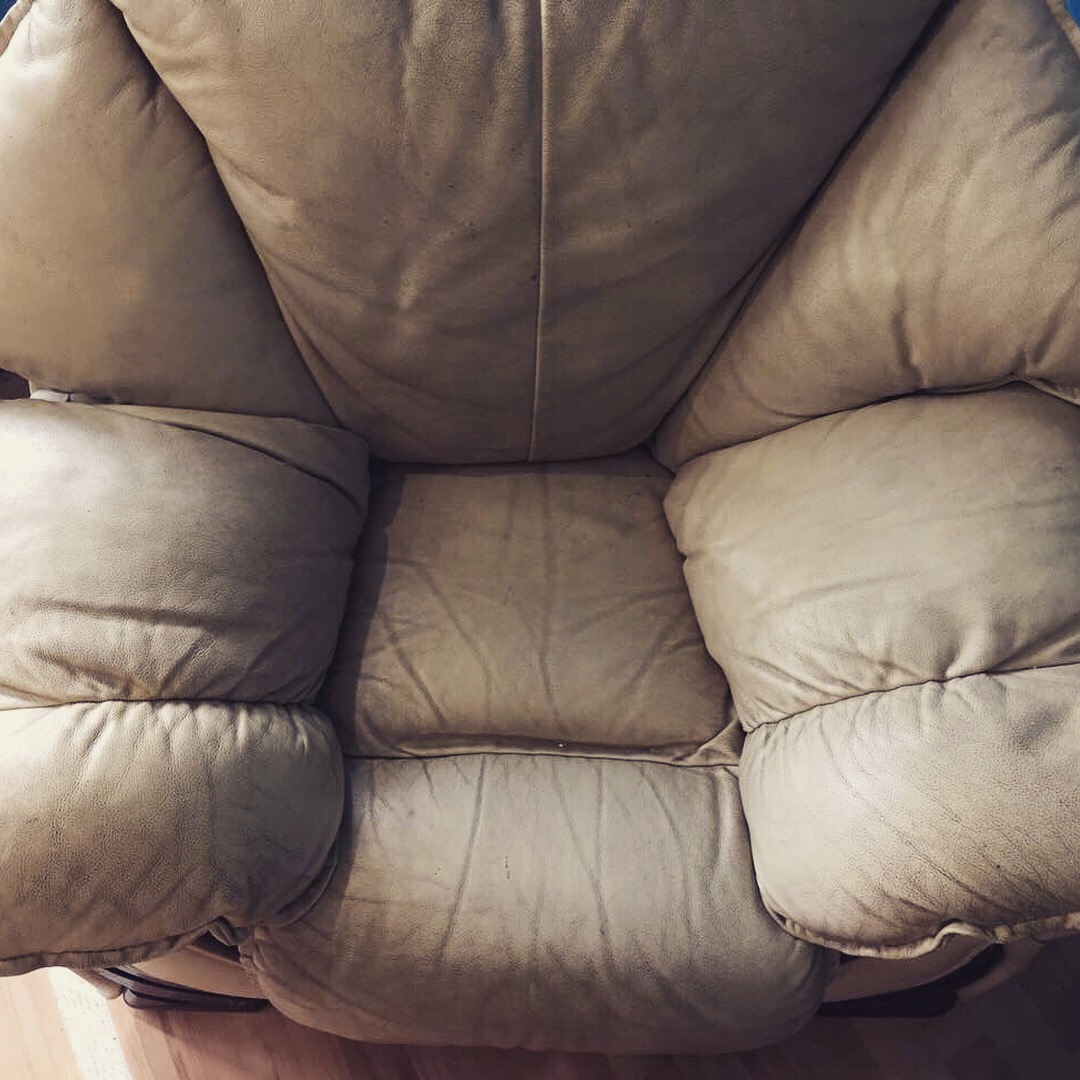
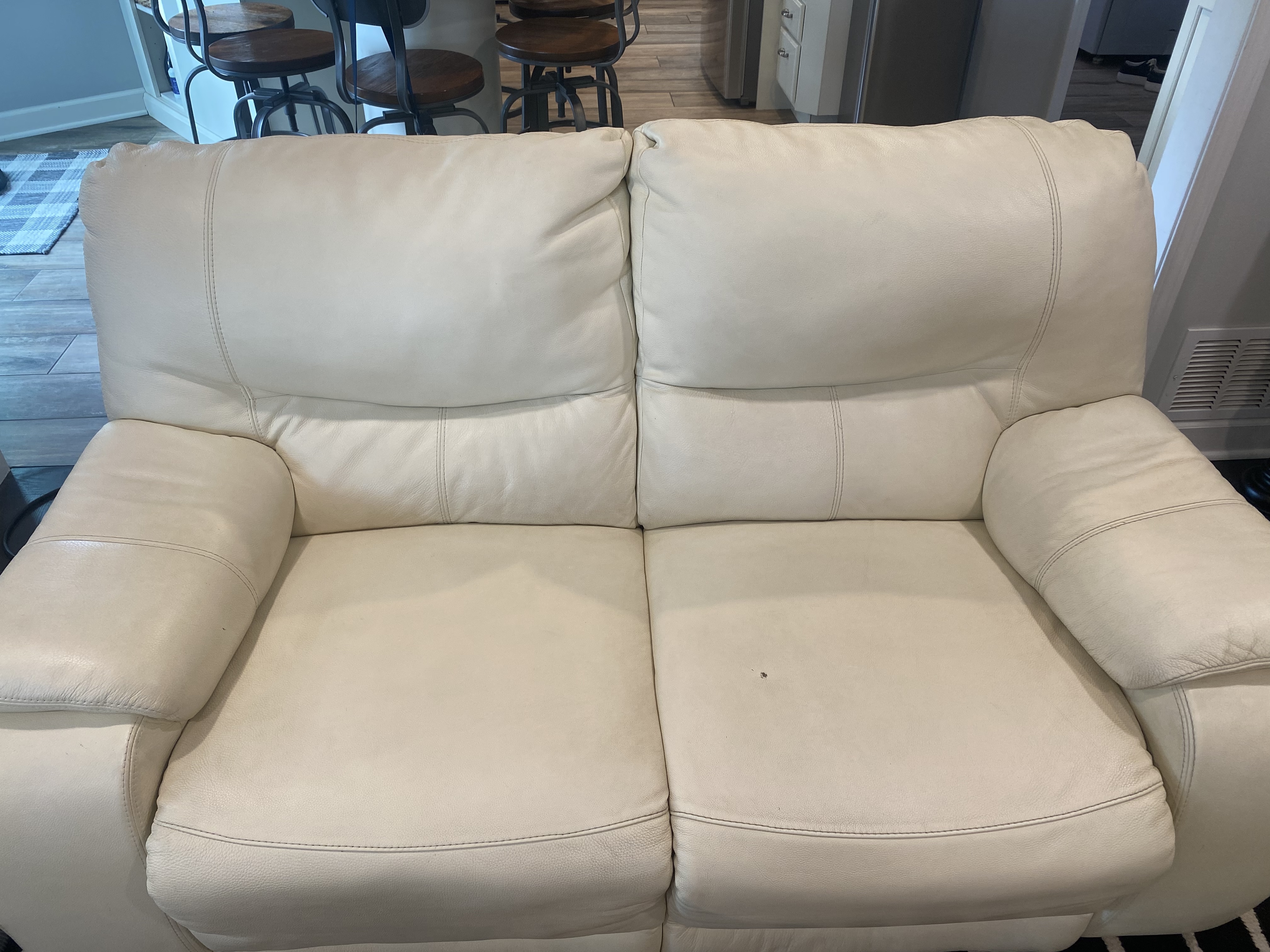
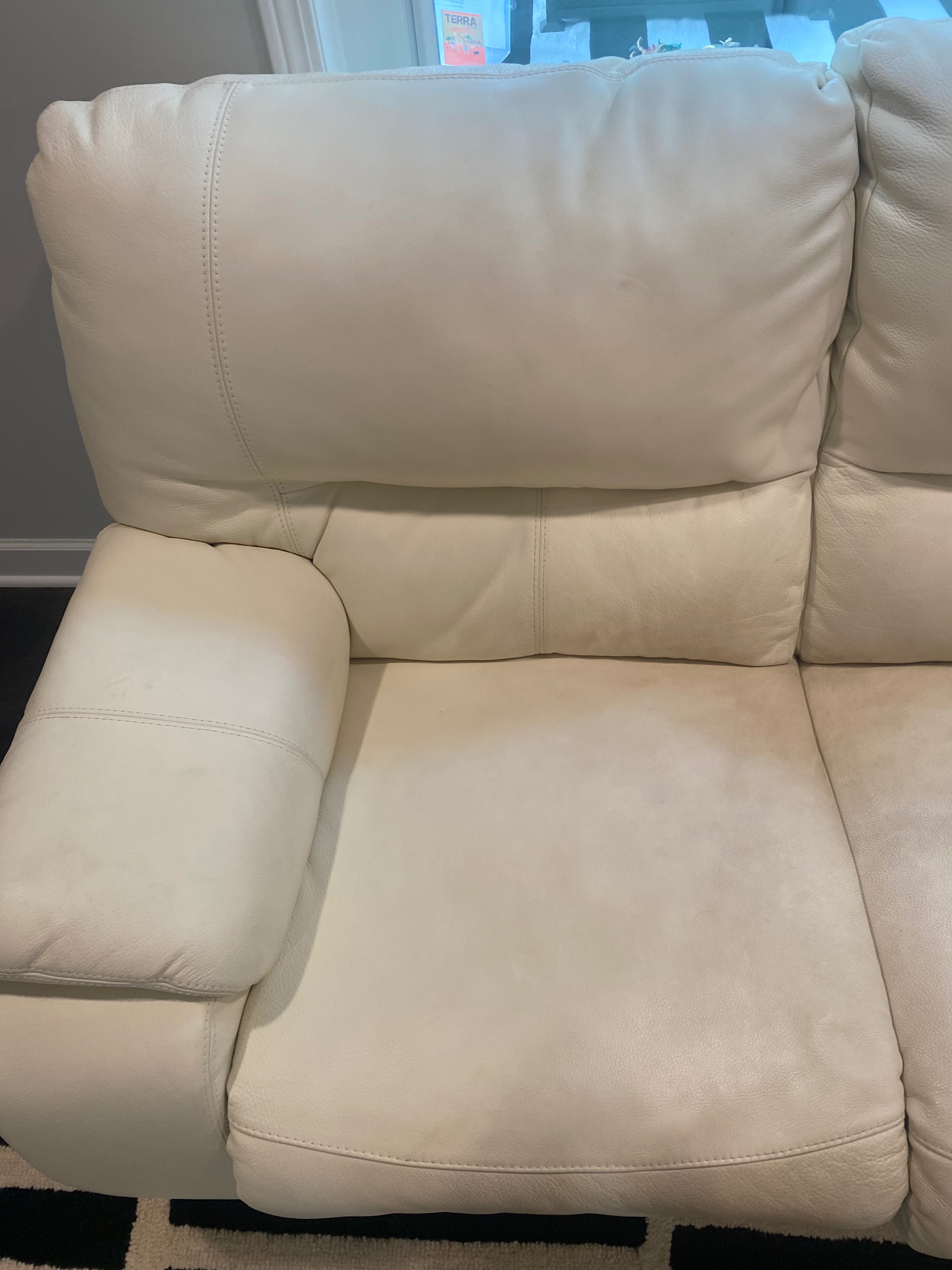
Reliable results, safe cleaning, and a service you can trust, every time.
If you're not fully satisfied, we come back free within 14 days. No hassle, no extra charge.
The price we quote is the price you pay. A $200 visit minimum, reached by combining items, and no hidden fees.
Leather is cleaned by hand in sections, with no steam, no hot-water extraction, and no soaking. Heat and water dry out and damage the hide.
We identify the leather type and finish, then spot-test our cleaner on a hidden area before we touch the rest.
Every clean finishes with conditioner worked in by hand to feed the hide and help protect against cracking.
We don't clean cowhide, real suede, or nubuck. We tell you up front and decline rather than risk the piece.
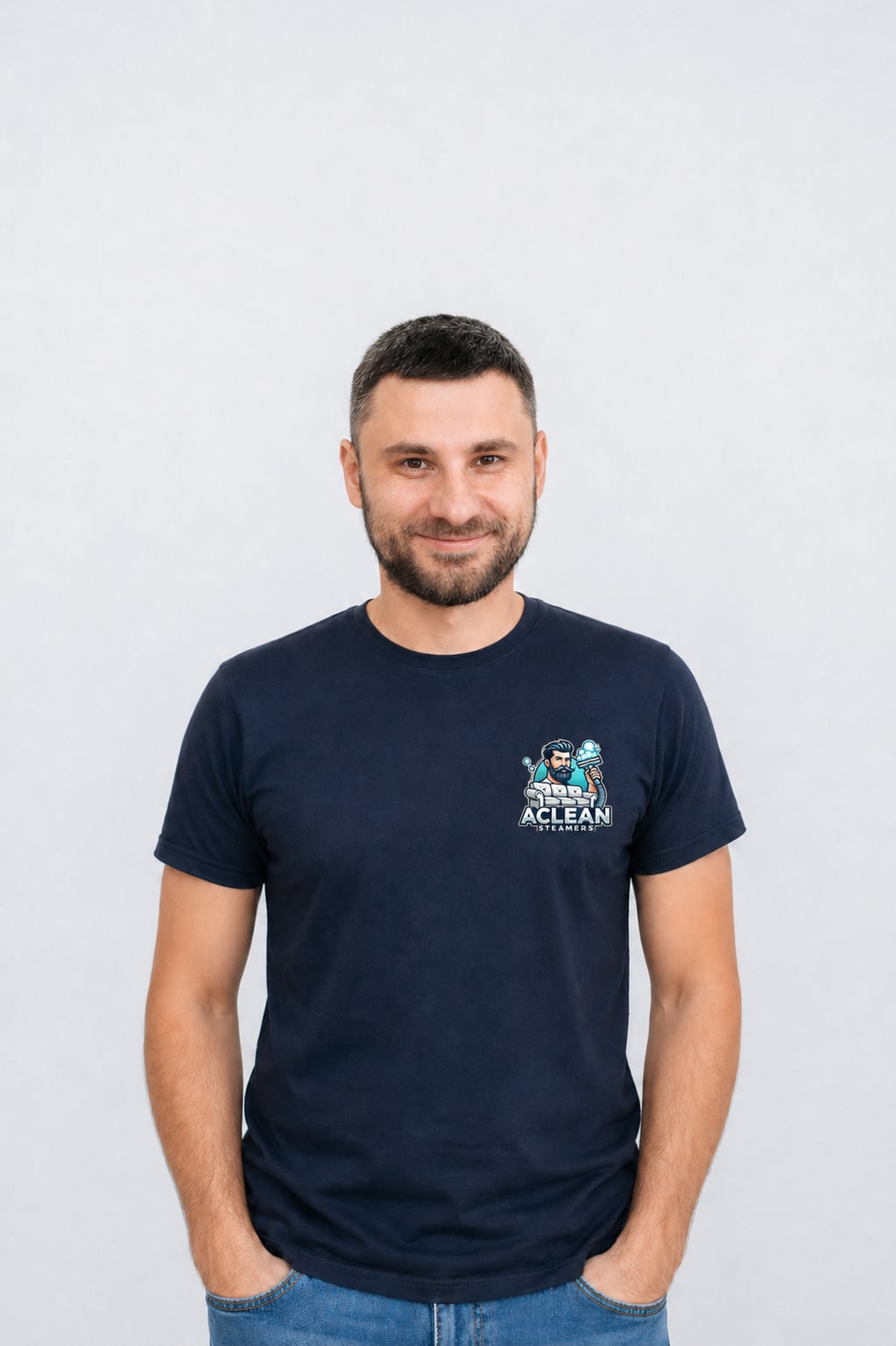
Sergio Semeniuk
Founder
Leather furniture in Raleigh deals with cycles that drier climates do not. Summer humidity drives body oils and hand lotion deeper into the pores, and winter forced-air heating then dries the hide and cracks the surface along armrests and headrests. We clean leather across North Hills executive sofas, Cary home-office recliners, and Apex family-room sectionals with a two-step process: pH-balanced cleaner to lift oils, conditioner to restore moisture. Cleaning every 12 to 18 months keeps leather looking and feeling new for decades longer than untreated pieces.
I cleaned my first sofa in 2012 in Kyiv. After ten years and a place among the top three furniture cleaning companies in the city, I moved to North Carolina in 2022 and brought the same standards with me. Every job in Raleigh starts with a careful inspection. I keep the 14-day re-clean guarantee in writing because I believe you should not pay twice for the same work.
Maintained, calibrated, and ready for every job in Raleigh.
Every inch inspected and properly cleaned, every time.
If you're not fully satisfied, we come back at no charge.
5-star reviews from Aclean Steamers clients in the Triangle, pulled live from Google and Trustindex.
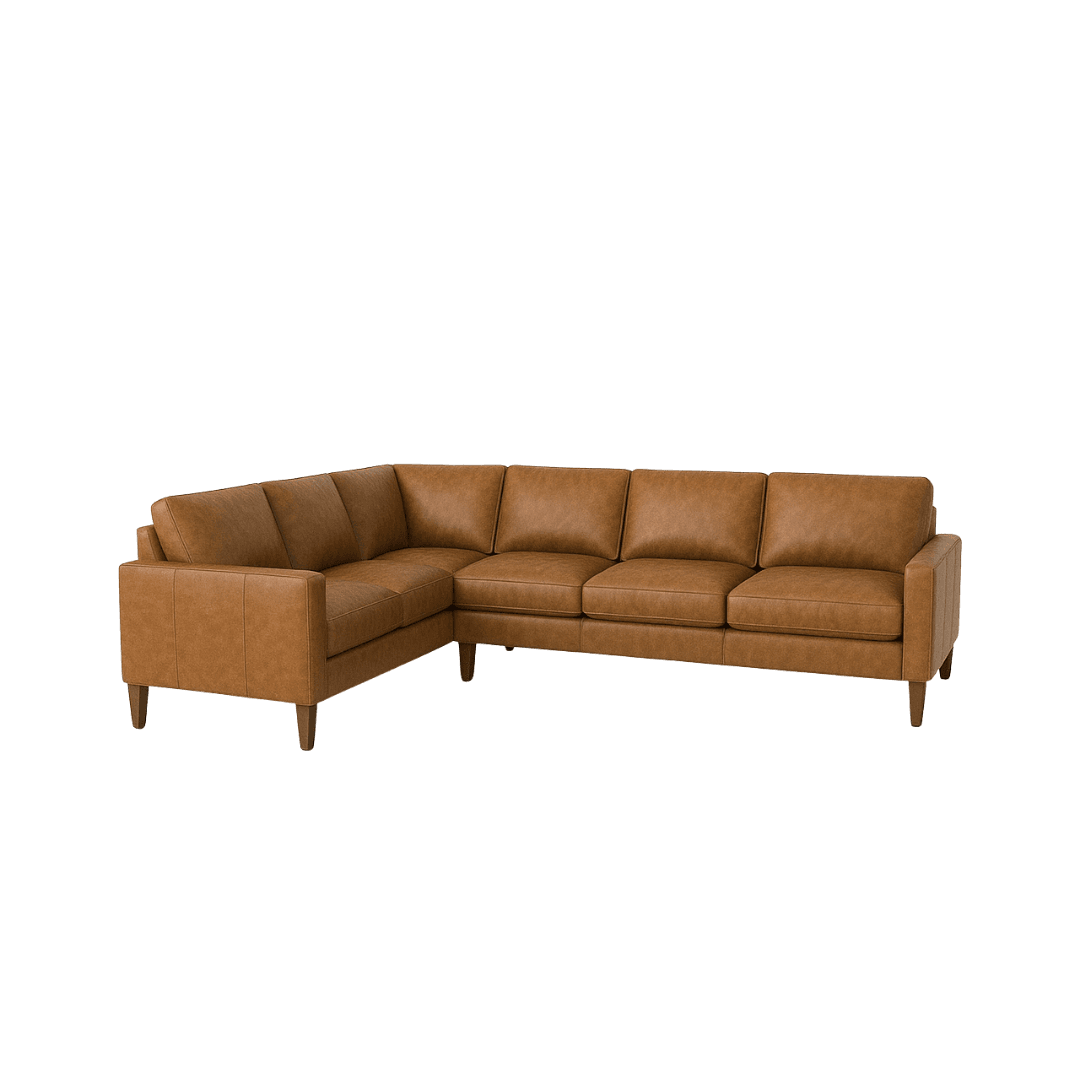
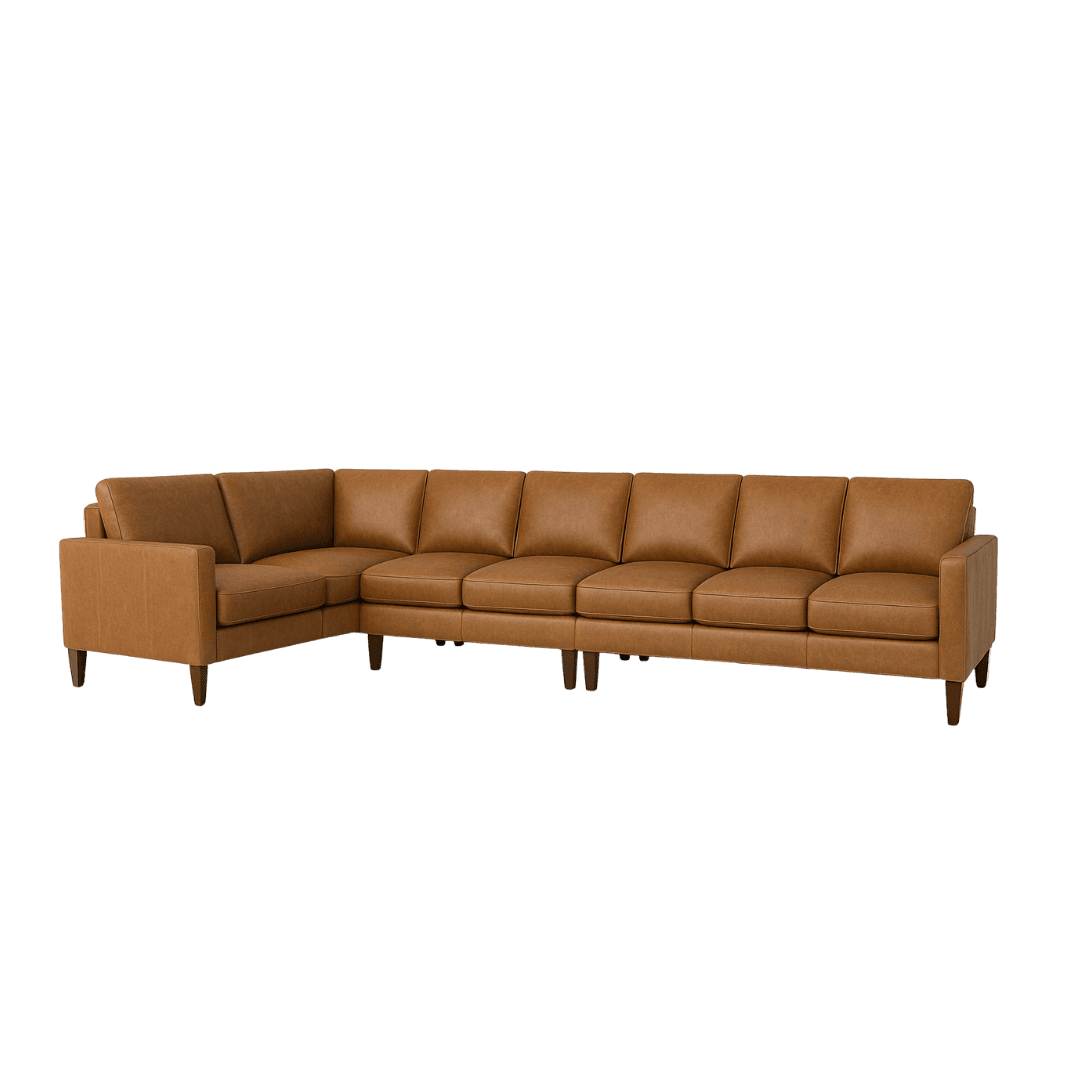
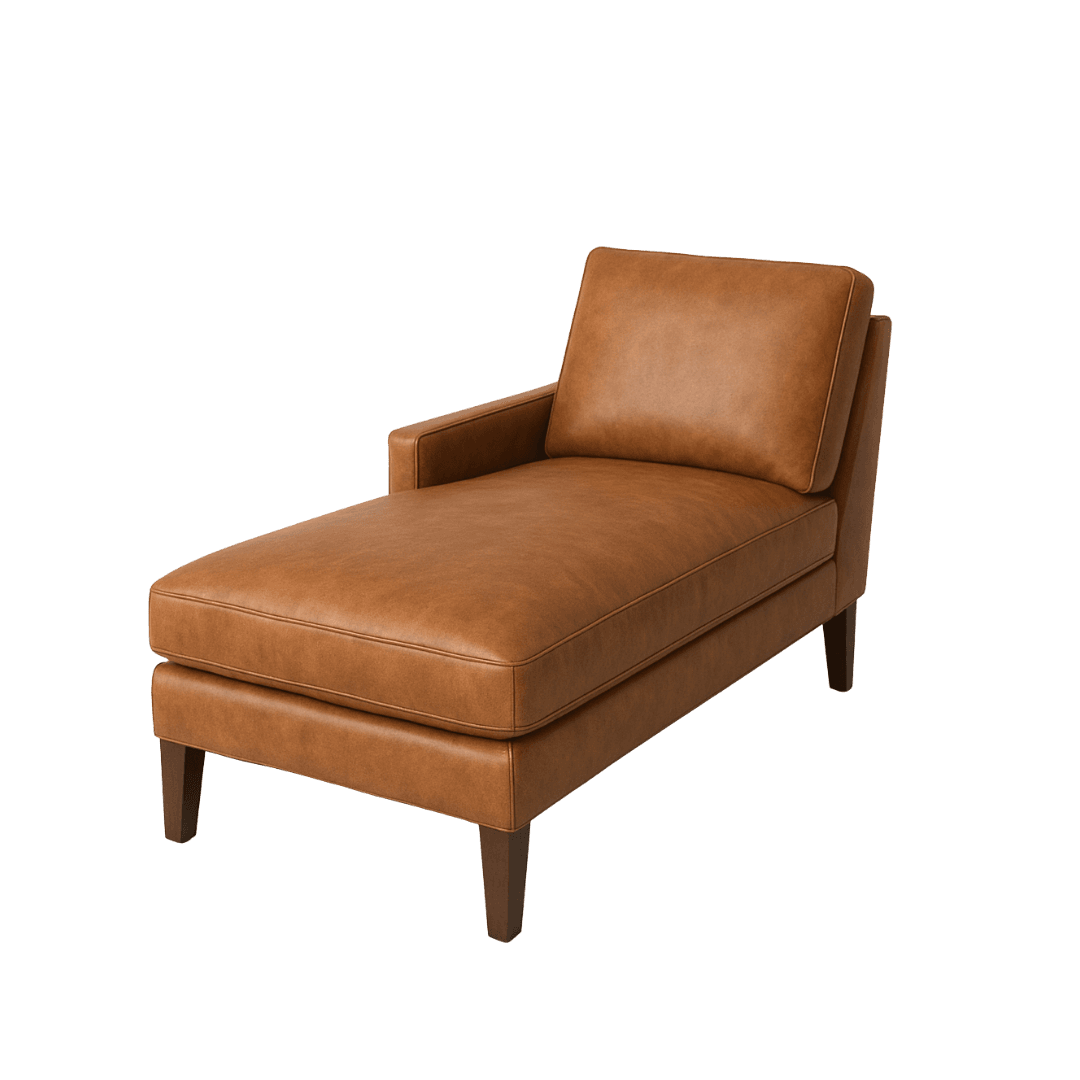
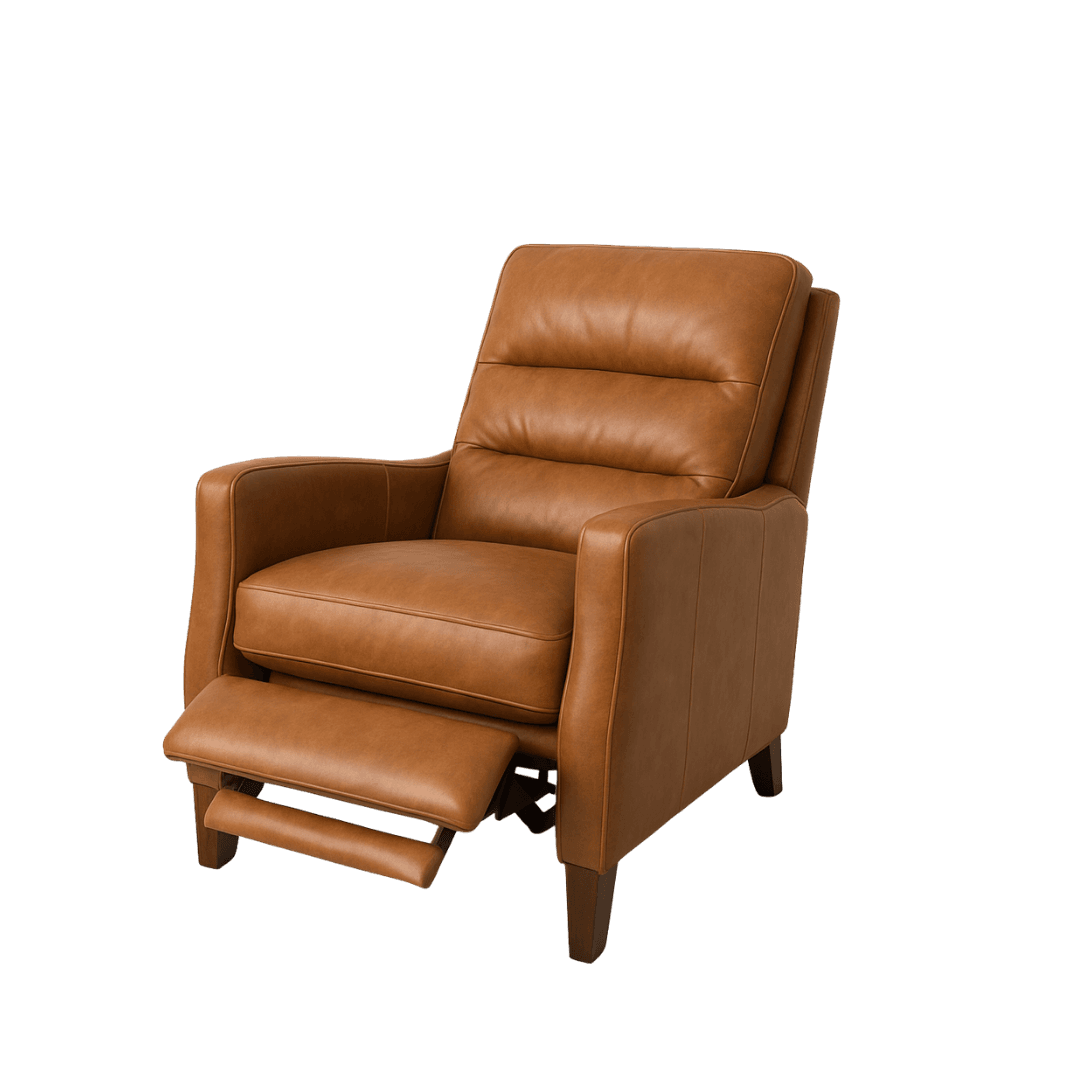
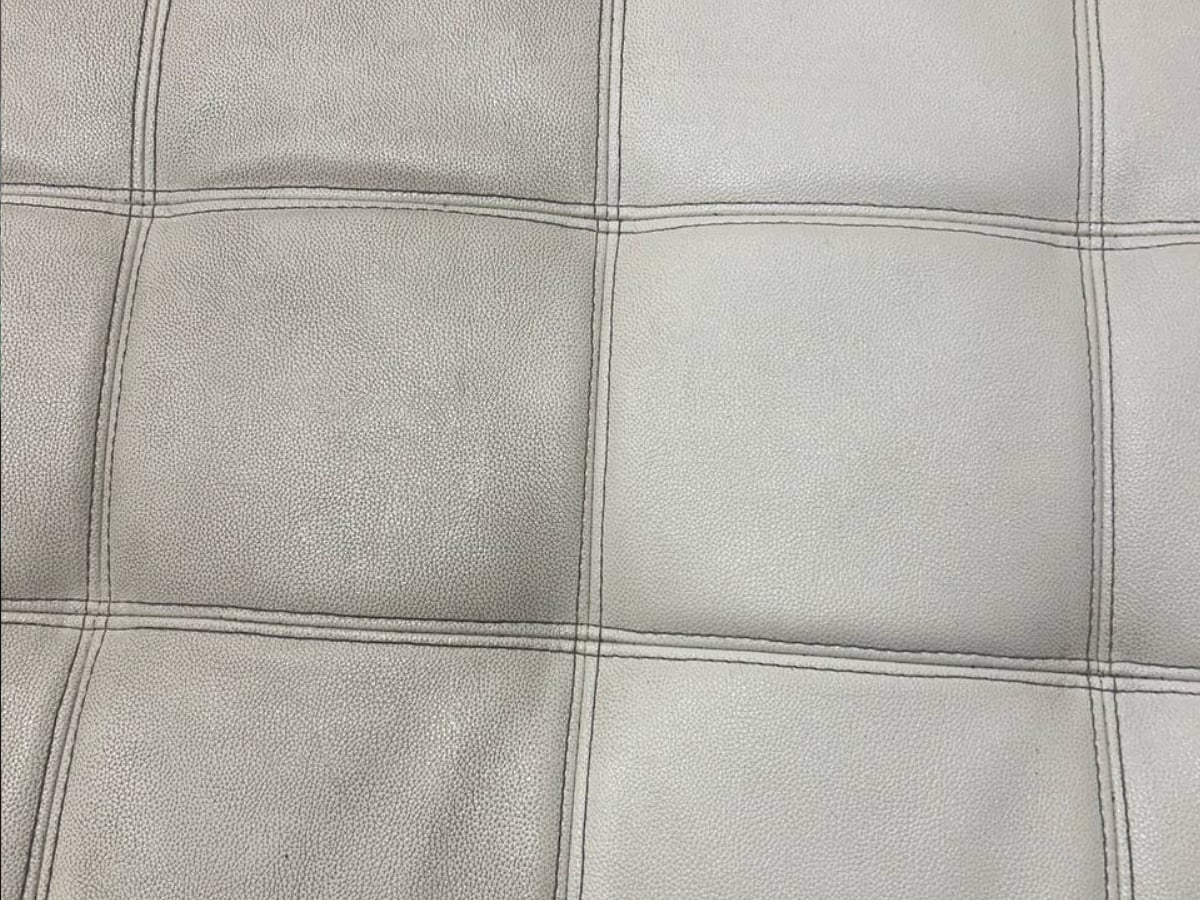
Recent leather cleaning projects across Raleigh, Cary, Apex, and the Triangle. Sofas, recliners, office chairs, car interiors.
We use commercial-grade equipment and proven methods to deliver deeper, safer, and longer-lasting cleaning results.
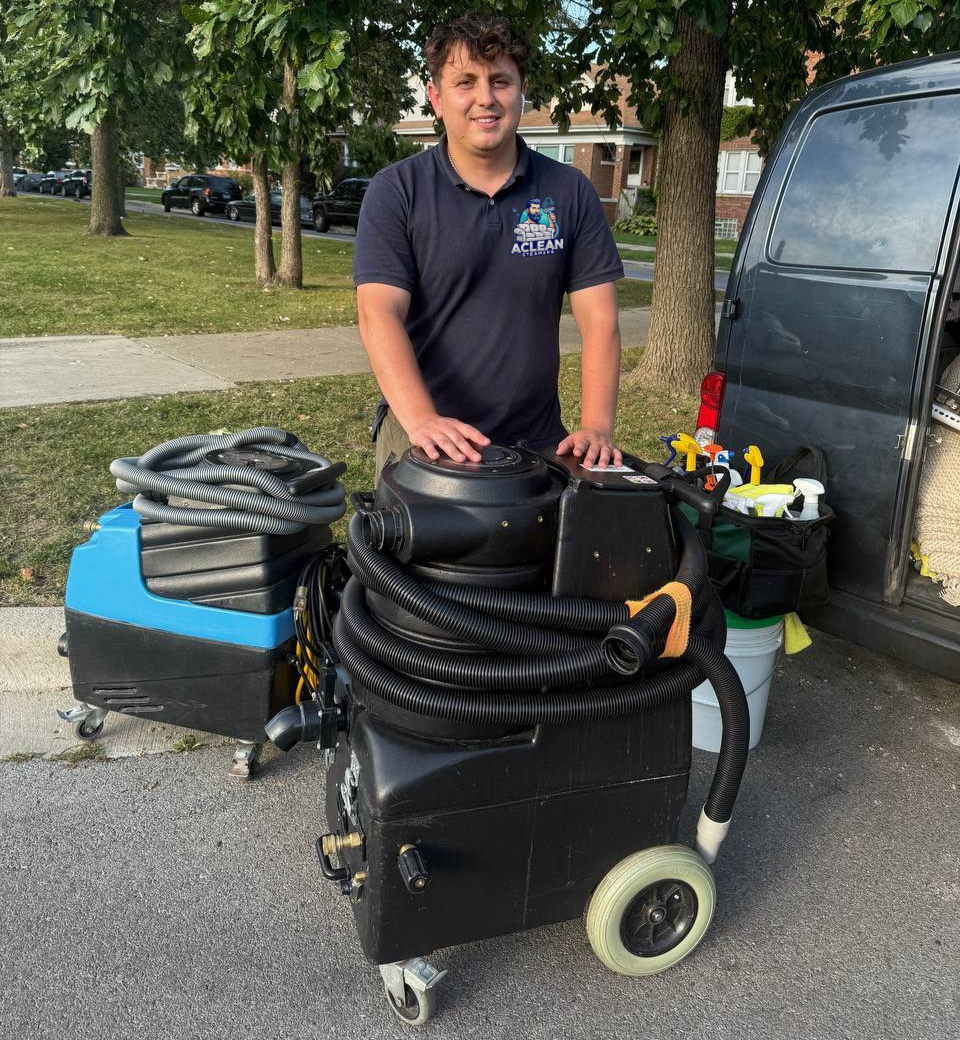
Most cleaning companies rent their gear from the hardware store. We don't. Every job runs on commercial-grade equipment built for daily professional use, with the method matched to the material: hot-water extraction for carpet and upholstery, controlled low-moisture cleaning for mattresses, and hand cleaning and conditioning for leather. The same professional setup we've used since 2012, maintained weekly, calibrated for every fabric type.
A hand-applied clean and condition, matched to your leather. No steam, no water extraction.
We identify the leather type and finish first and confirm what is safe to clean. We do not take cowhide, suede, or nubuck.
We spot-test our leather cleaner on a hidden area to be sure the finish reacts safely before we start.
We vacuum dust, grit, and hair from the surface and along the seams, so nothing gets ground into the grain.
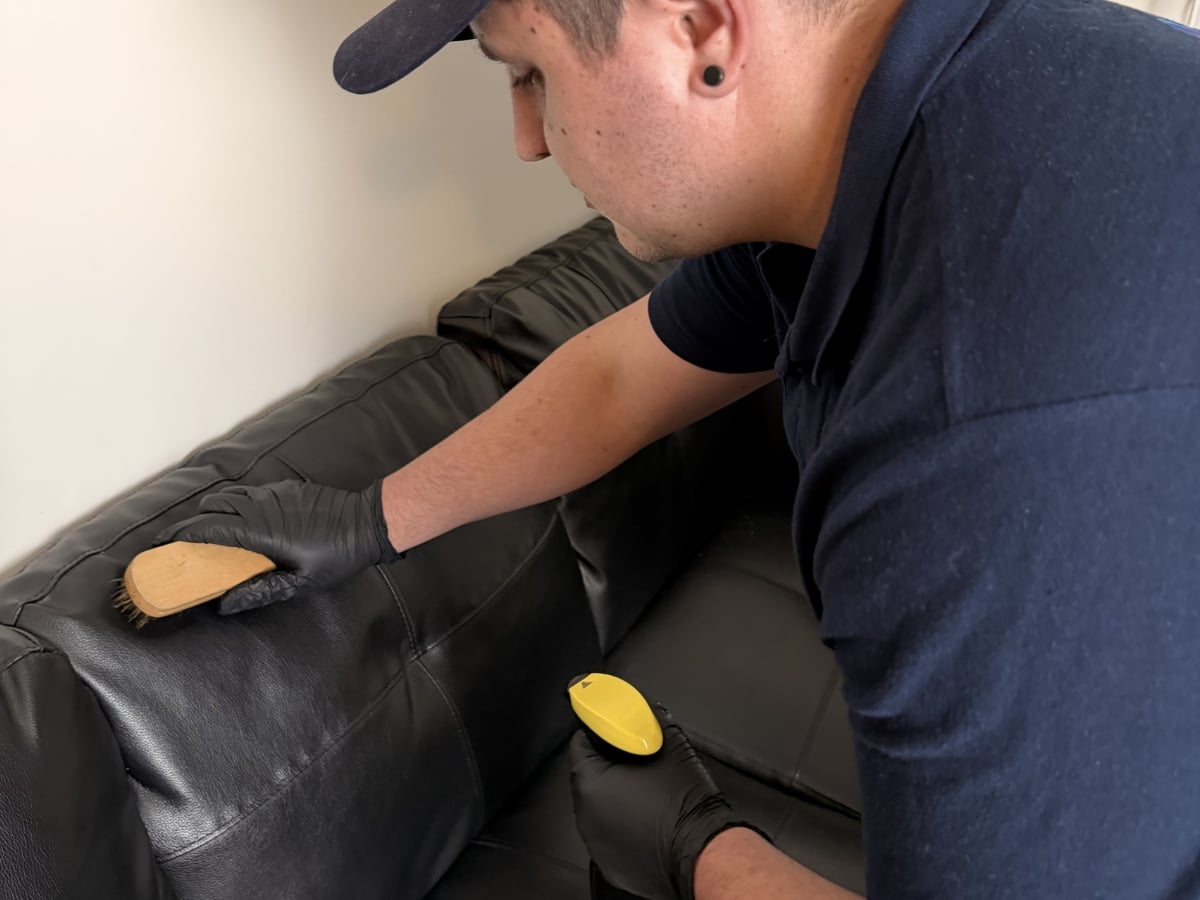
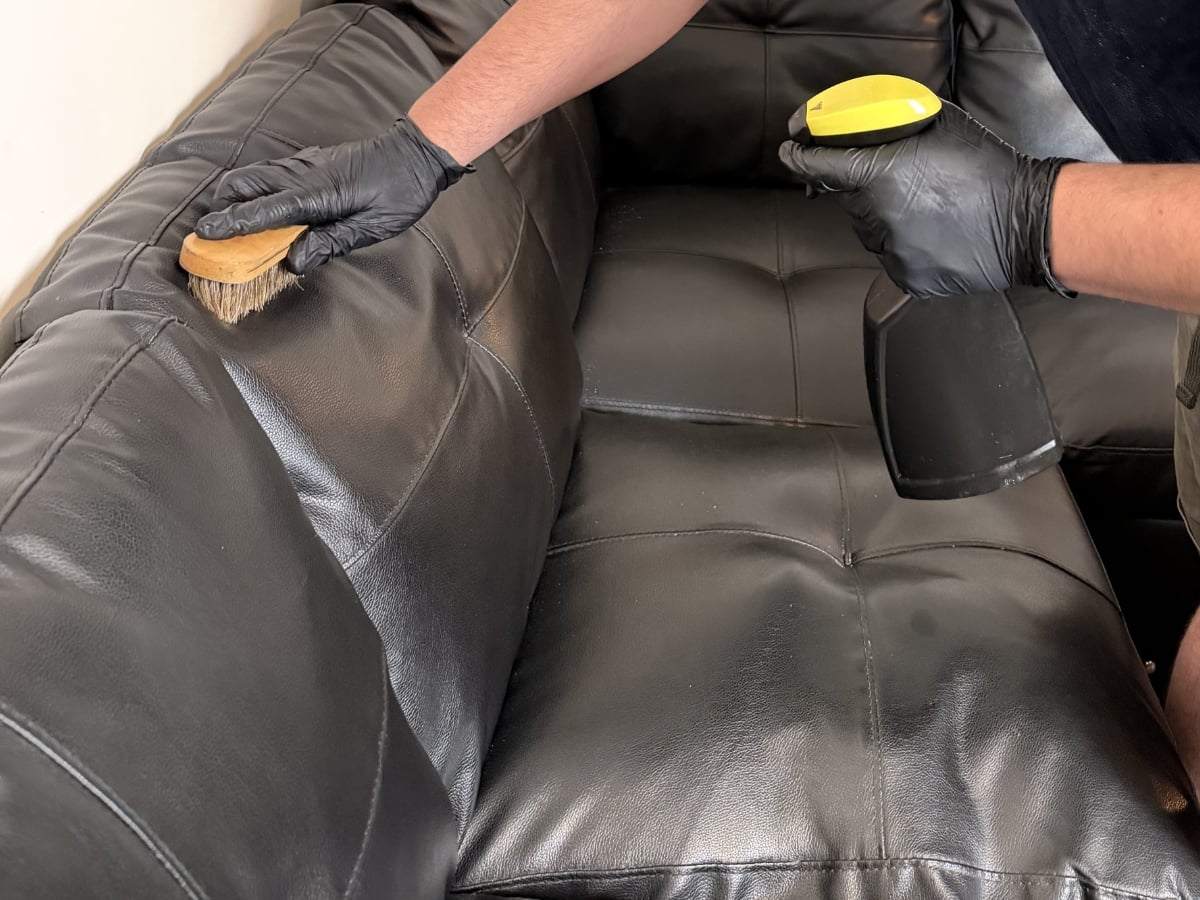
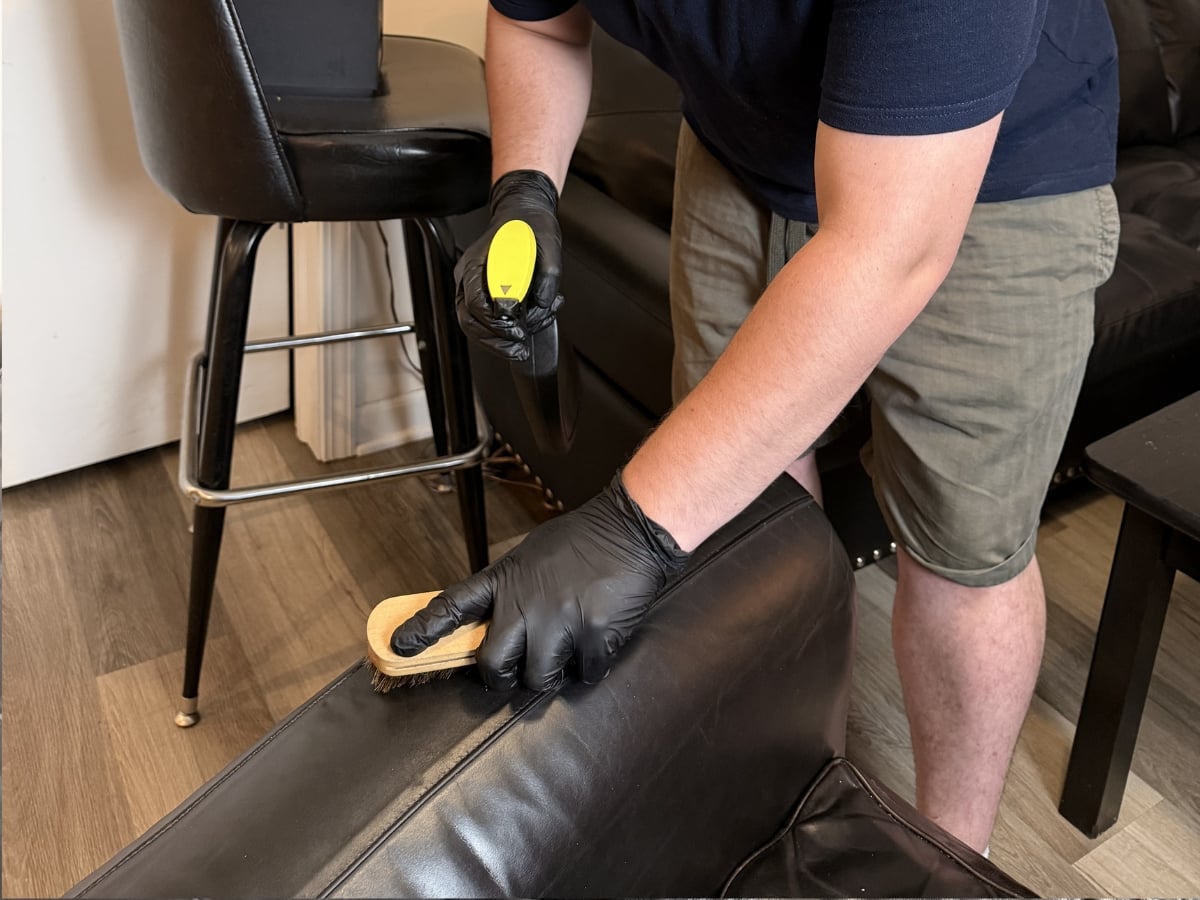
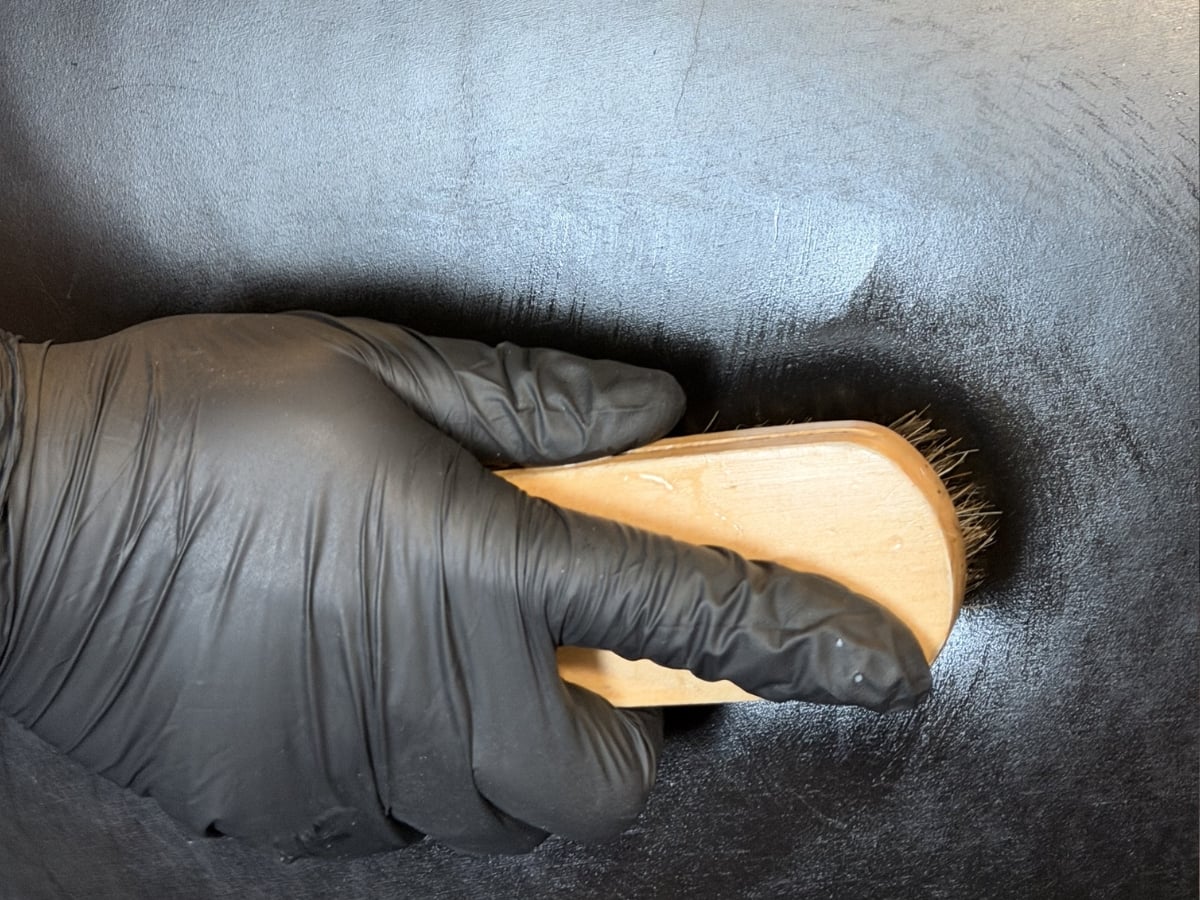
A leather-specific cleaner is worked in by hand with a microfiber cloth and a soft horsehair brush. No steam, no soaking, no extraction.
We finish by conditioning the hide in several thin coats by hand to restore suppleness and help protect against cracking.
We review the result together, with optional bio-enzymatic odor treatment if you need it.
Choose your preferred payment. No fees on our side.
We respond within 5–15 minutes. Photos help us give you a faster, more accurate price.
Answers to common questions about professional leather cleaning in Raleigh.
Our minimum is $200 per visit, not per item. Leather pieces are priced individually (a single armchair sits at the lower end, a sectional toward the top), and you reach the $200 minimum by combining pieces or adding another service on the same visit, for example leather cleaning plus a sofa or carpet. Aniline, semi-aniline, and pigmented leather all clean at the same base rate. We do not clean suede or nubuck; those need a solvent-only process we do not offer. Every job includes both cleaning and conditioning in one appointment. The price you get over text or phone is the price you pay, with no surprise charges for spots or wear we find on arrival.
Regular conditioning is the single most important factor in preventing cracks. Leather cracks because the oils in the hide dry out, the surface contracts, and the layer splits. Cleaning alone does not solve this, only adding oil back does. Once leather has cracked through the finish, the crack cannot be repaired by cleaning or conditioning, only by re-coloring or full re-upholstering, which we do not offer. Schedule a professional conditioning every 9 to 12 months on leather furniture in active use, every 18 to 24 months on lighter use, to keep the surface from reaching that point.
Most ink and food stains we can lift if the leather has not absorbed the stain past the finish. Pen ink on pigmented leather usually comes out cleanly. Pen ink on aniline leather is harder and may leave a faint mark even after treatment because aniline absorbs deeply. Water marks (the white rings from water sitting on leather) we can often blend out with cleaning and conditioning. Pet scratches and claw marks we cannot repair, only clean the area around them. We tell you upfront if we see a stain that may not lift completely.
Leather is faster than fabric, usually fully ready within 4 to 6 hours after the conditioner has absorbed. Light contact (sitting briefly) is fine within an hour. Heavy use, sleeping on the leather, or pets piling on should wait until the conditioner has fully absorbed and the surface is no longer slick to the touch. The leather will feel slightly slick or oily for the first day, which is normal and means the conditioner is doing its job. By 24 hours the finish should be back to normal feel.
No. Suede and nubuck need a solvent-only process, and that is not a service we offer. We tell you upfront if your piece turns out to be either one, rather than treating it with a method that would mark or stain it. Our leather service is for finished, semi-aniline, aniline, bonded, and faux leather, which we clean and condition by hand. If you are unsure what your furniture is, send a photo when you reach out and we will let you know before booking.
Cleaning lifts surface oils and grime, and in doing so it leaves the hide a little drier than before. Conditioning feeds that moisture and natural oil back in, which restores suppleness and helps protect the leather against cracking over time. Doing one without the other leaves the leather worse off, which is why conditioning is included in every job, not an optional extra. On very dry or older leather we apply several thin coats. We cannot reverse cracks that have already formed, but consistent conditioning is what keeps healthy leather from getting there.
Triangle leather faces year-round stress: summer humidity that pushes moisture into the leather and indoor heating in winter that pulls oils back out, leaving the finish dry and ready to crack. Most leather finishes are designed for moderate climates, not the humidity swing of central North Carolina. Professional cleaning and conditioning every nine to twelve months addresses both extremes and is the difference between leather that lasts a decade and leather that cracks at year four.
Cleaning lifts surface contaminants: body oils, lotion residue, food spills, pet hair, dust. Conditioning replenishes the leather's natural oils that have evaporated over the years of use. New leather feels supple because of those oils. Old leather feels stiff and cracks because the oils are gone and never get replaced. Doing one without the other leaves the leather worse off, cleaning strips oils, conditioning over dirt seals it in. Every leather job we do includes both steps in the right order: clean first, condition second.
Yes. We work with every common leather finish: aniline (most absorbent, premium hide), semi-aniline (light protective coat, mid-range), and pigmented (protected finish, durable). Each takes a different cleaner and a different conditioner because the surface absorption changes. Aniline leather we test for absorbency on a hidden corner first to confirm the conditioner will distribute evenly. Pigmented leather can take more aggressive cleaning. We identify the leather type during the walkthrough and adjust the products accordingly. We do not clean suede or nubuck at all; they need a solvent-only process we do not offer, and we flag it during the walkthrough if your piece is one of those.
A single leather chair or recliner takes about 45 to 75 minutes including conditioning. A leather sofa runs 90 minutes to two hours. A sectional with multiple pieces takes two to three hours. The conditioning step needs to dwell on the leather to absorb properly, so the technician works the cleaner across the whole piece first, then applies conditioner systematically. We always book a 60-minute arrival window and confirm a tighter ETA on the day.
Every 9 to 12 months for leather furniture in daily use (family sofa, primary recliner). Every 18 to 24 months for lighter use (formal living room sofa, office chair used a few hours a day). High-quality aniline leather needs conditioning more often than pigmented leather because the absorbent finish loses oils faster. Skipping conditioning is the most common cause of premature cracking on otherwise expensive leather furniture. Setting a calendar reminder once a year is the simplest way to protect what you paid for.
Usually no, and we would rather be honest about that than overpromise. Pen and marker removal is restoration work, not the refresh clean we provide. Fresh ink that is still sitting on the surface sometimes lifts during cleaning, but set-in ink that has bonded with the finish generally will not come out, and pushing harder risks damaging the leather around it. We tell you upfront when we see ink we do not expect to clear, so you can decide before we start.
Yes. Leather cleaning and conditioning service covers Cary, Apex, Holly Springs, Wake Forest, Morrisville, Durham, Chapel Hill, and surrounding Wake County homes at the same flat-rate pricing as central Raleigh. Both residential and commercial leather work fits the same service window. For multiple leather pieces across one home, we typically complete the full job in a single afternoon.


